
Shoe
Footwear protecting and comforting the human foot since prehistory.

Wikipedia / Wikimedia Commons
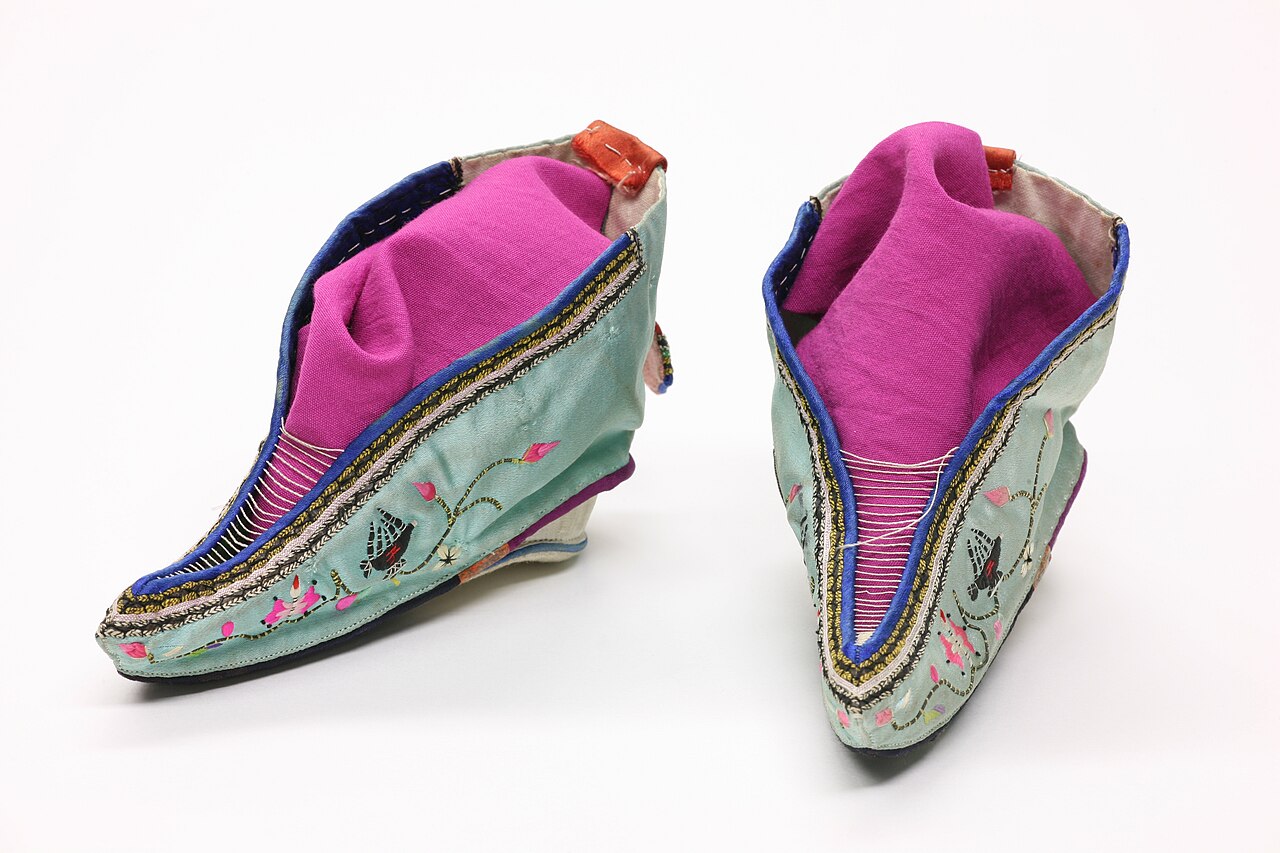
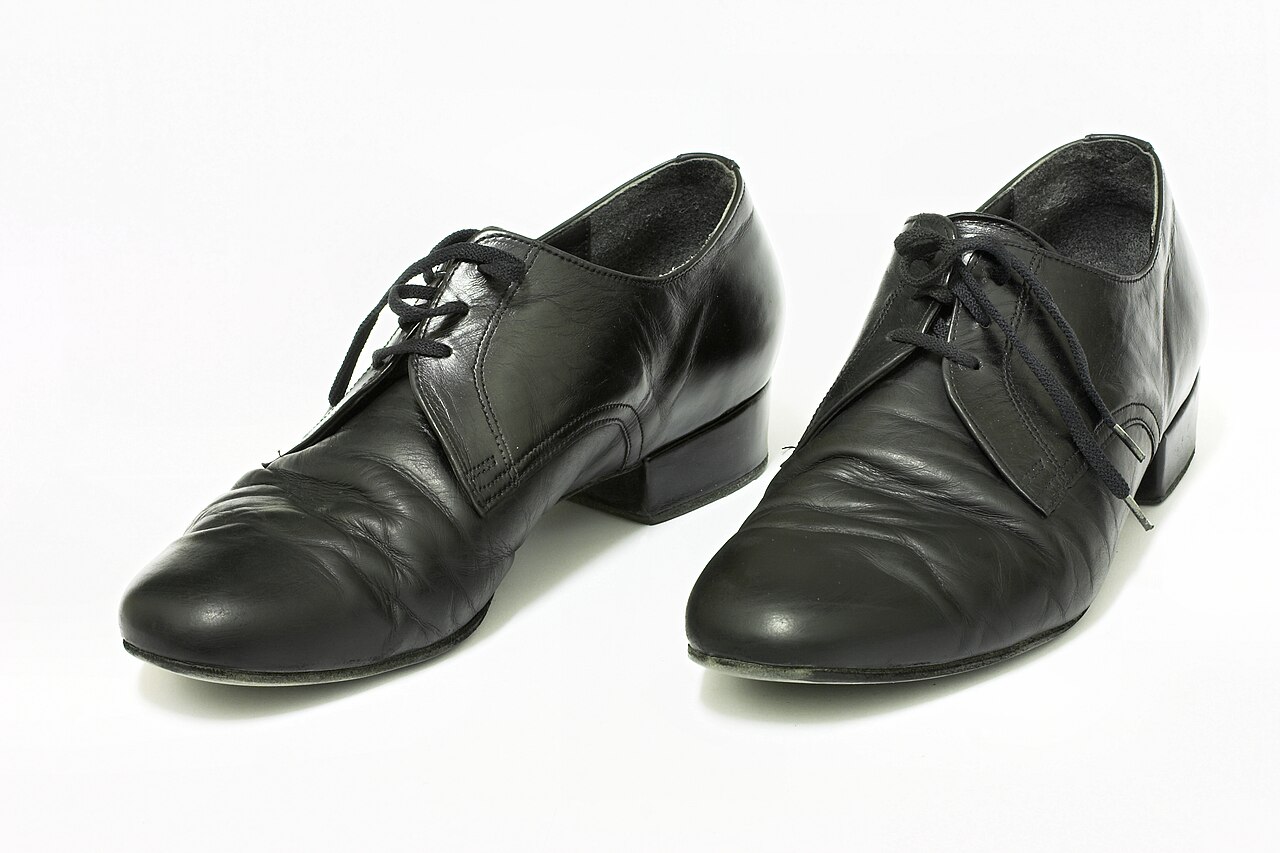
A shoe is an item of footwear normally found in pairs intended to protect and comfort the human foot, usually made in such a way that one is designed to fit the left foot and the other the right foot. Shoes provide further protection to the vulnerable human foot, though the foot is highly adaptable to various terrains. Form was originally tied to function, but over time, shoes also became fashion items. Some shoes are worn as safety equipment, such as steel-toe boots, which are required footwear at industrial worksites.
- earliest_known_shoe
- sagebrush bark sandals from approximately 10,500 BP to 9200 BP
- oldest_leather_shoe
- 3500 BC, found in Areni-1 cave complex in Armenia
- global_industry_value
- $200 billion a year
- percentage_in_landfills
- 90%
- common_materials_traditional
- leather, wood, canvas
- common_materials_modern
- rubber, plastics, other petrochemical-derived materials
Lore & Background
The earliest known shoes are sagebrush bark sandals dating from approximately 10,500 BP to 9200 BP, found in the Fort Rock Cave in Oregon in 1938. The world's oldest leather shoe, made from a single piece of cowhide laced with a leather cord, was found in the Areni-1 cave complex in Armenia in 2008 and is believed to date to 3500 BC. Ötzi the Iceman's shoes, dating to 3300 BC, featured brown bearskin bases, deerskin side panels, and a bark-string net. The Jotunheimen shoe, discovered in August 2006, is estimated to have been made between 1800 and 1100 BC, making it the oldest article of clothing discovered in Scandinavia. Sandals and other plant fiber tools found in Cueva de los Murciélagos in Spain in 2023 date to approximately 7500 to 4200 BC, believed to be the oldest shoes found in Europe. Footprints suggestive of shoes or sandals, dating back to between 73,000 and 136,000 BP, have been found in South Africa, along with bone awls that could have made simple footwear. Study of smaller toe bones shows thickness decreased approximately 40,000 to 26,000 years ago, suggesting common wearing of shoes.
Reader's Guide
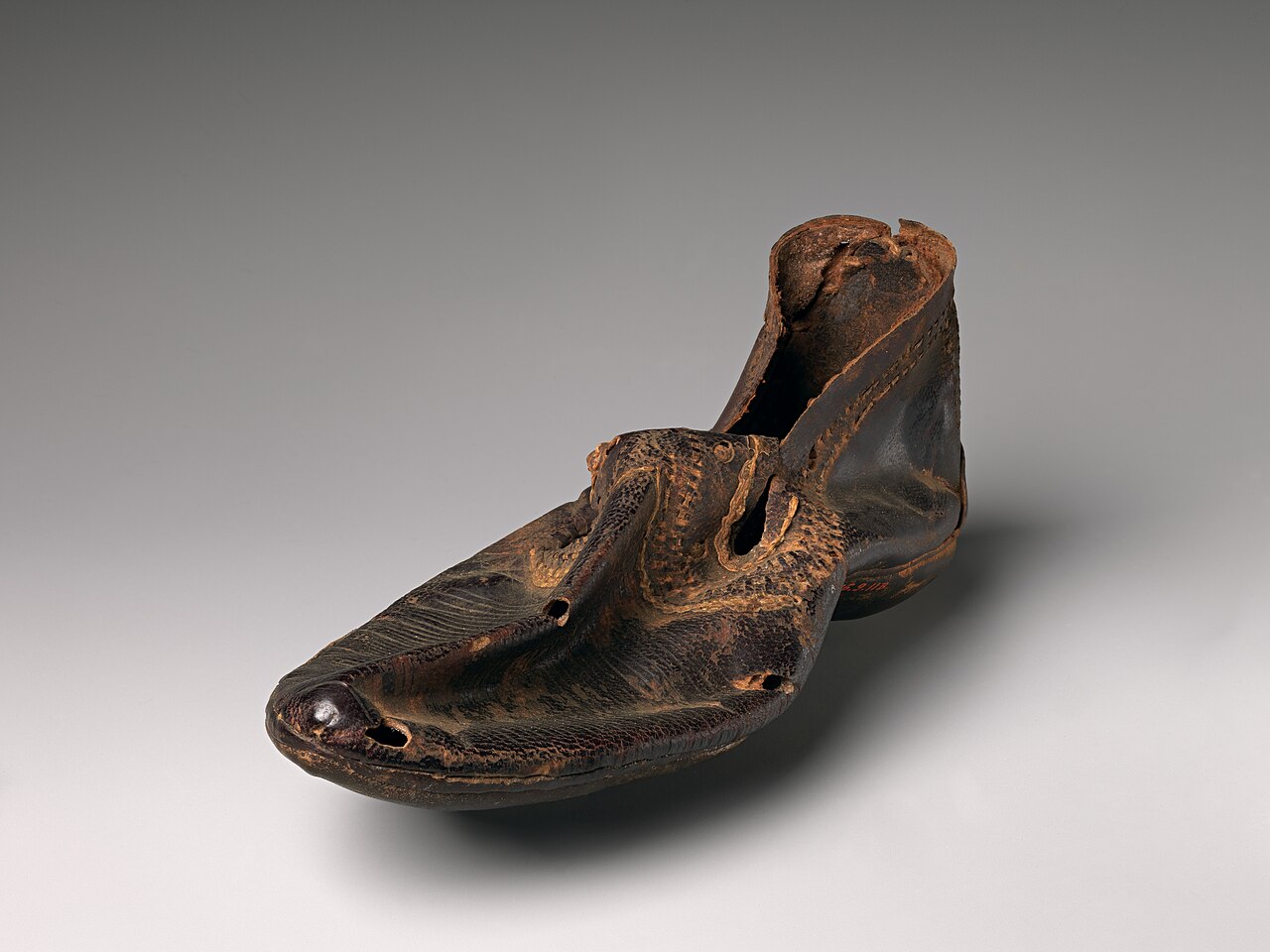
Shoes have evolved from simple foot coverings to complex fashion and safety items. In antiquity, thong sandals were worn in ancient Egypt from 4000 BC, made from papyrus and palm leaves. The Romans issued chiral footwear to soldiers, with riveted insoles for durability and traction, and shoe design denoted rank. In medieval times, shoes could be up to 2 feet long, with toes filled with hair, wool, moss, or grass. The turnshoe method of construction was common. Contemporary footwear varies vastly in style, complexity, and cost, from basic sandals to high fashion shoes made of expensive materials. Shoes are increasingly made from rubber, plastics, and other petrochemical-derived materials. The global shoe industry is a $200 billion a year industry, but 90% of shoes end up in landfills because materials are hard to separate, recycle, or otherwise reuse.
Did You Know?
- The earliest known shoes are sagebrush bark sandals from approximately 10,500 BP to 9200 BP, found in Fort Rock Cave, Oregon.
- The world's oldest leather shoe, dating to 3500 BC, was found in the Areni-1 cave complex in Armenia.
- Footprints suggestive of shoes or sandals dating back to between 73,000 and 136,000 BP have been found in South Africa.
- 90% of shoes end up in landfills because the materials are hard to separate, recycle, or otherwise reuse.
From a Jet Window to an Industry Icon
Avia's story began in 1979 in Oregon, when Jerry Stubblefield and his son set out to build a footwear brand that would carve its own niche in the sports market. The name itself carries a whimsical origin: Stubblefield reportedly conceived the word "avia" while aboard a commercial jet, drawing from the Latin "avis," which translates to "bird." The aviation association was intentional, lending the brand a sense of lightness and forward motion. Working as a father-and-son team, the two developed signature engineering concepts that would define the company's identity, most notably the cantilever sole—a design so distinctive and effective that it was widely imitated across the industry. This innovation helped propel Avia into a leadership position among American footwear makers during the 1980s. The company's early focus on women's walking and aerobics shoes, alongside a solid men's lineup, established Avia as a household name in performance and everyday footwear well before it expanded into other categories.
Court Dominance and the 800 Series
During the late 1980s and into the early 1990s, Avia built a formidable presence on basketball courts through its 800 Series line, which spawned numerous variants tailored to different playing styles. The brand attracted a remarkable roster of NBA talent who chose Avia as their on-court footwear, including Scottie Pippen, John Stockton, John Salley, A. C. Green, Clyde Drexler, and Robert Parish. For a company that had initially made its reputation in women's walking and aerobics shoes, this basketball surge represented a significant expansion of its athletic credibility. Avia's shoes earned a reputation for combining performance, durability, and comfort in a way that resonated with professional athletes. The brand's basketball legacy did not end with the 1990s; as recently as 2020 through 2023, Avia served as the official footwear sponsor for Finland's national basketball team, demonstrating that the 800 Series name and the brand's court heritage continued to carry weight in international competition decades after its American peak.
Engineering Patents and the Nike Showdown
Avia's product identity was built on a suite of proprietary performance technologies that set it apart from competitors. The Cantilever Heel provided dedicated heel support, the ARC (Anatomical Rebound Cradle) delivered comprehensive foot cushioning and arch support, and the FOM system addressed shock compression. These innovations were not merely marketing terms; they formed the structural backbone of Avia's shoes from the company's earliest days. In 1991, that innovation became the center of a high-profile legal battle when Avia filed a lawsuit against Nike, alleging that the Air 180 and Air Force 180 models infringed upon Avia's patents. The core of the accusation was that Nike had effectively pirated Avia's Cantilever technology, which used a cushion mechanism to deliver both shock absorption and stability. Avia maintained that this technology had been foundational to its products since the company's founding. The suit was broadened in January 1992 and ultimately settled in December of that same year, a resolution that underscored how central Avia's engineering patents were to the industry's competitive landscape.
A Chameleon of Ownership and Reinvention
Avia's corporate history reads like a series of handoffs that tested the brand's resilience. In 1987, Reebok purchased the company for $180 million, a sum that reflected Avia's peak market position. Reebok later passed Avia to the American Sporting Goods Corporation in the late 1990s. The brand then found a home with Sequential Brands Group through the Galaxy Brands deal in 2014. That arrangement proved short-lived: on August 31, 2021, Sequential Brands filed for Chapter 11 bankruptcy protection, and just one month later in September, Avia was acquired by Galaxy Universal, where it remains as a subsidiary. Between these ownership transitions, Avia continued to evolve its product range. In 2013, the company launched a dedicated performance and lifestyle activewear line, extending its footprint beyond footwear into yoga and running apparel. Two years later, in 2015, Avia ventured into wearable technology, signaling an ambition to stay relevant in an increasingly digital fitness landscape. Today, the brand specializes in running, yoga, and lifestyle activewear, shoes, and accessories.
Gallery



Frequently Asked Questions
What is a shoe?
A shoe is a piece of footwear crafted in left-and-right pairs to shield and cushion the human foot. Although the foot is naturally quite adaptable to varied terrain, shoes add an extra layer of comfort and defense.
What is the oldest known shoe ever discovered?
The earliest confirmed footwear dates to roughly 10,500–9,200 years ago and consisted of sandals fashioned from sagebrush bark. The oldest leather shoe identified to date was pulled from the Areni-1 cave complex in Armenia and is dated to around 3500 BC.
What materials are shoes typically made from?
Traditional construction relied on leather, wood, and canvas, whereas modern manufacturing leans heavily on rubber, plastics, and other petrochemical-derived materials. The global footwear industry now generates approximately $200 billion in annual revenue.
How did shoes evolve beyond pure protection?
At first, a shoe's shape was dictated almost entirely by its practical job of guarding the foot. Over the centuries they became fashion statements and, in settings like industrial worksites, mandatory safety equipment such as steel-toe boots.
What is the environmental impact of discarded shoes?
Roughly 90% of thrown-out shoes end up in landfills, making footwear a significant contributor to solid-waste pollution. This has fueled growing demand for sustainable materials and circular-design approaches within the $200 billion industry.
More in Clothing And Accessories 1-19
Spotted an error? Know more?
This is a living reference — every entry is fact-audited, and reader corrections feed straight into our audit queue. Suggest an edit · See this site's audit record