
Coat
An outer garment for the upper body, worn for warmth or fashion.

Wikipedia / Wikimedia Commons
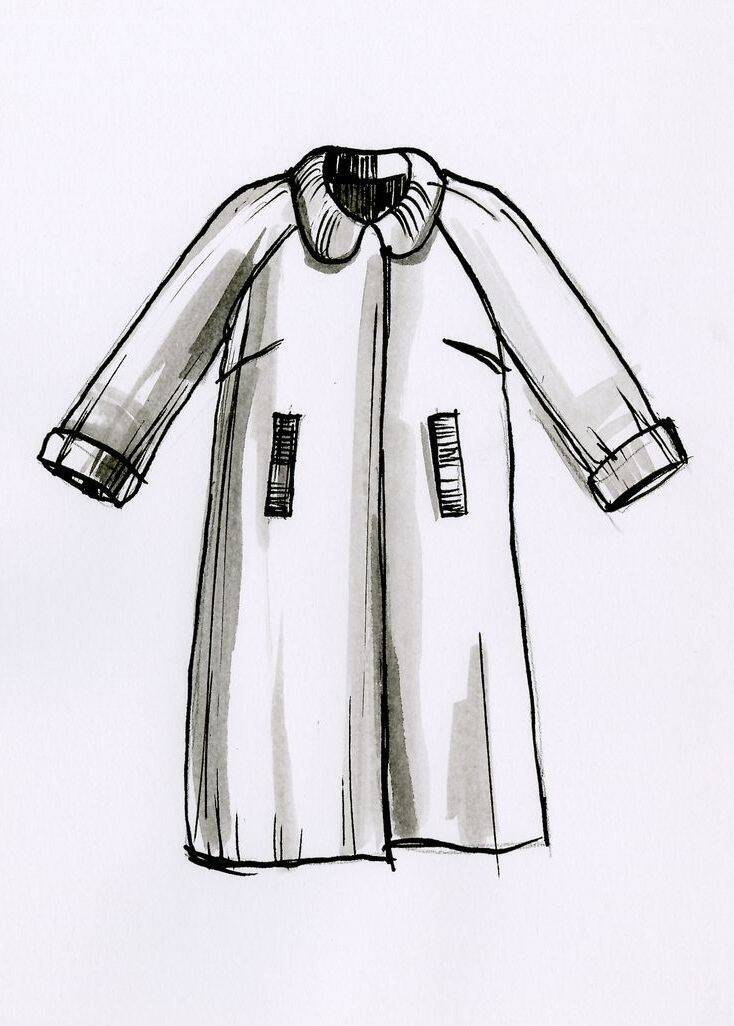
A coat is an outer garment for the upper body, worn by any gender for warmth or fashion. Coats typically have long sleeves and are open down the front, closing by means of buttons, zippers, hook-and-loop fasteners, toggles, a belt, or a combination of some of these. Other possible features include collars, shoulder straps, and hoods.
- Etymology
- First attested in English c. 1300, from Old French and Latin cottus, originating from Proto-Indo-European for woolen clothes.
- Early form
- Coat of mail (chainmail), a tunic-like garment of metal rings, usually knee- or mid-calf length.
- Historical origin
- Traced to sleeved, close-fitted coats worn by Scythian nomads; similar styles found on 4,000-year-old Tarim mummies and 5,000-year-old Ötzi.
- Medieval usage
- Mid-length, sleeved outer garment worn by both men and women, fitted to the waist and buttoned up the front.
- 18th–19th century shift
- Overcoats supplanted capes and cloaks; Industrial Revolution and sewing machine made coats more affordable and popular.
- Modern confusion
- By mid-20th century, terms jacket and coat became confused for recent styles; difference maintained for older garments.
Lore & Background
The word coat is one of the earliest clothing category words in English, attested as far back as the early Middle Ages. The Oxford English Dictionary traces its modern meaning to around 1300, when it was written as cote or cotte. The word stems from Old French and then Latin cottus, originating from the Proto-Indo-European word for woolen clothes. An early use in English is coat of mail (chainmail), a tunic-like garment of metal rings, usually knee- or mid-calf length.
Reader's Guide
The origins of the Western-style coat may be traced to the sleeved, close-fitted and front-fastened coats worn by Scythian nomads of the Eurasian steppes, though this style may be much older, having been found with four-thousand-year-old Tarim mummies and in the five-thousand-year-old mummy of Ötzi. By the eighteenth century, overcoats had begun to supplant capes and cloaks as outerwear in Western fashion. Before the Industrial Revolution, the high cost of cloth meant certain styles represented wealth and rank, but as cloth became more affordable post-industrialization, people within a lower social class could adopt fashionable outdoor wear, including a coat. In the nineteenth century, the invention of the sewing machine paired with existing textile machinery increased the affordability of mass-produced, ready-to-wear clothing and helped spur the popularity of wearing coats and jackets. By the mid-twentieth century the terms jacket and coat became confused for recent styles; the difference in use is still maintained for older garments. In the early nineteenth century, Western-style coats were divided into under-coats and overcoats. The term coat has begun to denote just the overcoat rather than the under-coat, though older usage persists in expressions like 'to wear a coat and tie.' An overcoat is designed to be worn as the outermost garment for outdoor wear; a topcoat is a slightly shorter overcoat. Modern coats include the British Warm, car coat, Chesterfield coat, covert coat, duffel coat, parka, pea coat, raincoat or Mackintosh, and trench coat.
Did You Know?
- The word coat is one of the earliest clothing category words in English, attested as far back as the early Middle Ages.
- An early use of coat in English is coat of mail (chainmail), a tunic-like garment of metal rings.
- The Western-style coat may trace back to Scythian nomads and has been found on 4,000-year-old Tarim mummies and the 5,000-year-old mummy of Ötzi.
- By the mid-twentieth century, the terms jacket and coat became confused for recent styles, though the difference is maintained for older garments.
Linguistic Heritage & Ancient Roots
The word coat carries one of the deepest lineages in English clothing vocabulary, with attestation stretching back to the early Middle Ages. The Oxford English Dictionary pins its modern sense to roughly 1300, when scribes recorded it as cote or cotte. Tracing the term further back, it passes through Old French and the Latin form cottus before reaching its ultimate source: a Proto-Indo-European root meaning woolen garments. This etymological thread connects a medieval English speaker to an ancient Indo-European herder describing a fleece-woven wrap. One of the earliest documented English uses of the word appears in the phrase coat of mail, referring to a tunic-like garment constructed from interlinked metal rings, typically reaching the knee or mid-calf. That military application underscores how the concept of a structured, front-fastened upper-body covering was already well established in the language long before the fashion industry gave it its modern connotations.
From Steppe Nomads to Medieval Wardrobes
The Western-style coat's design DNA can be traced to the sleeved, close-fitting, front-fastened garments worn by Scythian nomads roaming the eurasian steppes. Yet even that origin may be conservative: similar forms have been recovered alongside four-thousand-year-old Tarim mummies and the five-thousand-year-old remains of Otzi, suggesting the basic silhouette predates recorded history by millennia. By the medieval and Renaissance periods, costume historians note that the cote or cotte had settled into a recognizable shape—a mid-length, sleeved outer garment worn by both men and women, cinched at the waist, buttoned up the front, and finished with a full skirt. In those essentials, the form was strikingly close to what we would call a modern coat. The garment's gender-neutral function and practical construction made it a staple of everyday dress across social strata, long before the eighteenth century saw overcoats gradually displace capes and cloaks as the dominant form of Western outerwear.
Industrialization and the Democratization of the Coat
Before the Industrial Revolution took hold in the latter half of the eighteenth century, cloth was so prohibitively expensive that particular styles of clothing served as visible markers of wealth and social rank. The coat, as a substantial outer garment requiring significant fabric, was no exception. Once industrialization rendered textile production far more affordable, members of lower social classes could finally adopt the fashionable outdoor wear previously reserved for the wealthy elite, and the coat sat at the center of that shift. The nineteenth century accelerated the trend further: the invention of the sewing machine, working in tandem with existing textile machinery, made mass-produced, ready-to-wear clothing accessible to a far broader population and helped drive the widespread popularity of coats and jackets as everyday staples. By the mid-twentieth century, the boundary between jacket and coat had begun to blur in common usage for newer styles, even though tailoring traditions still maintained a clear distinction for older garment types.
The Taxonomy: Under-Coats, Overcoats, and Jackets
In the early nineteenth century, Western tailoring drew a clear line between under-coats and overcoats. An under-coat was the structured jacket worn beneath the outermost layer, while the overcoat served as the final, protective garment for outdoor wear. The term under-coat is now archaic, and in most modern usage coat simply means the overcoat. Yet the older sense lingers in expressions like wear a coat and tie, which refers to a suit jacket, not an overcoat. Tailors still call the maker of all such garments a coat maker, and both the stroller and the dinner jacket share the same basic pattern as the lounge coat. Jackets, by contrast, traditionally denote shorter under-coats reaching the upper thigh, whereas older formal coats like tailcoats extend to the knee. Overcoats designed to sit atop knee-length garments are cut slightly longer and wider to fully enclose them. Lengths range from knee to ankle, with mid-calf as the default, and American English speakers occasionally use jacket and coat interchangeably in casual speech.
Gallery

Frequently Asked Questions
What is a coat?
A coat is a long-sleeved outer garment for the upper body, worn by people of any gender for warmth or style. It opens down the front and fastens using buttons, zippers, hook-and-loop closures, toggles, a belt, or some combination of these.
Where does the word 'coat' come from?
The term entered English around 1300, borrowing from Old French and Latin 'cottus,' which ultimately traces back to a Proto-Indo-European root referring to woolen garments.
What was the earliest known form of a coat?
The earliest recognized type was the coat of mail, a tunic of linked metal rings typically reaching the knee or mid-calf. Even older examples include sleeved, close-fitting coats worn by Scythian nomads, with similar designs found on 4,000-year-old Tarim mummies and the 5,000-year-old Ötzi.
How did coats become popular and affordable?
In the 18th and 19th centuries, overcoats gradually replaced capes and cloaks as the go-to outer layer. The Industrial Revolution and the sewing machine then made mass production cheaper, bringing coats within reach of ordinary people.
What features does a coat typically have?
Beyond long sleeves and a front opening, coats commonly include collars, shoulder straps, and hoods. During the medieval period they were fitted to the waist and buttoned up the front, worn by both men and women.
More in Clothing And Accessories 1-19
Spotted an error? Know more?
This is a living reference — every entry is fact-audited, and reader corrections feed straight into our audit queue. Suggest an edit · See this site's audit record